Section 80E: How Much Tax Can You Actually Save on an Education Loan?
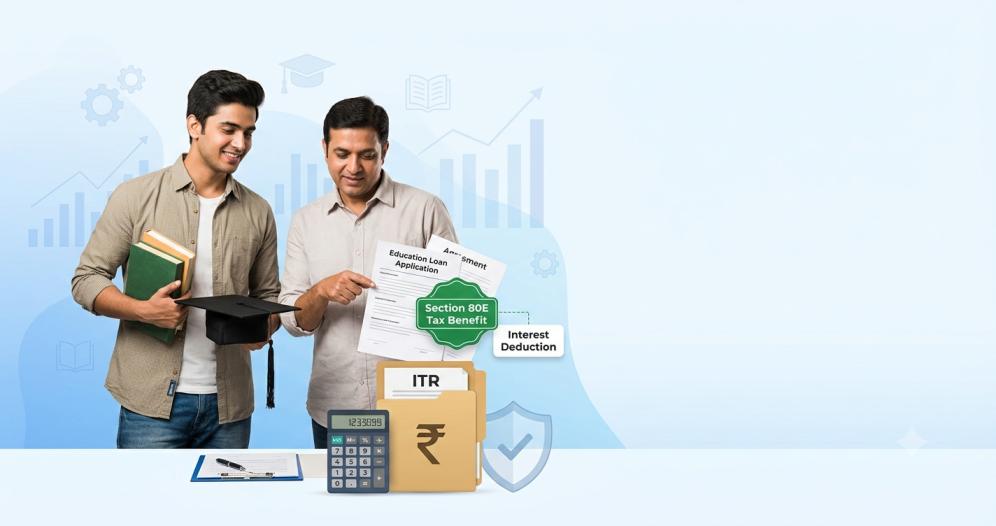
If you or your child took an education loan this year, there’s a good chance you’re leaving money on the table without even knowing it. Section 80E of the Income Tax Act lets you claim the entire interest you paid on an education loan as a deduction — not a fixed amount, not a percentage, the whole interest component. Most people find out about this by accident, usually while filing returns in July, which is a shame because a little planning around it can genuinely reduce what you owe.
Here’s everything you need to know, explained the way a friend who’s already been through it would tell you.
What Section 80E Actually Covers
Section 80E allows you to deduct the interest paid on an education loan from your taxable income — not the principal, just the interest, and with no upper cap. This applies whether the loan was taken for yourself, your spouse, your children, or even a student for whom you’re a legal guardian. You can read the exact provision on the Income Tax Department’s official deductions page, though it’s written in fairly dense legal language.
Take Priya, for example. She took a ₹12 lakh loan from SBI for her MBA at a private university in Pune. In her first year of repayment, she paid around ₹95,000 in interest alone. Under the old tax regime, that entire ₹95,000 comes off her taxable income — not capped at ₹50,000 or ₹1.5 lakh like some other sections. If she’s in the 20% tax slab, that’s roughly ₹19,000 saved in tax, just from interest she was going to pay anyway.
Who Can Actually Claim It
| Condition | Requirement |
|---|---|
| Loan taken for | Self, spouse, children, or a student you’re legal guardian of |
| Loan taken from | A recognized bank, financial institution, or approved charitable institution |
| Course type | Any course of higher education, in India or abroad, after Class 12 |
| Deduction amount | 100% of interest paid — no upper limit |
| Duration | Available for 8 years starting the year repayment begins, or until interest is fully repaid, whichever comes first |
| Tax regime | Old regime only — not available under the new tax regime |
The Catch Nobody Tells You About
This is the part that trips people up: Section 80E is only available under the old tax regime. If you’ve moved to the new regime for its lower slab rates, you lose access to this deduction entirely.
So before you assume you’re saving money, actually run the numbers both ways. If your education loan interest is substantial — say, above ₹1 lakh a year — it’s often worth sticking with the old regime just to claim this, even if the new regime looks better on paper for your salary alone. This is exactly the kind of decision where a quick calculation makes the difference between guessing and knowing.
A Real Example: Arjun’s Two-Year Loan
Arjun took a ₹6 lakh loan from HDFC for his engineering master’s abroad. His interest payments looked like this:
- Year 1: ₹48,000 interest paid → fully deductible under 80E
- Year 2: ₹42,000 interest paid → fully deductible
- Year 3 onward: Principal repayment increases, interest component drops — still deductible, just a smaller number each year
Over the 8-year window, Arjun could claim the full interest portion every single year, not just the first one. A lot of people assume this is a one-time deduction and forget to claim it again the following year — don’t make that mistake. Keep claiming it every year until either 8 years pass or the loan interest is fully paid off, whichever happens first.
What Documents You’ll Actually Need
Nothing complicated, but keep these ready before filing:
- Interest certificate from your bank or lender (most banks generate this automatically in your net banking under “loan statements” — SBI, HDFC, ICICI, and Axis all have this option)
- Loan sanction letter, showing the loan was for higher education
- Proof of enrollment/admission (if ever asked during scrutiny, though rarely required upfront)
Most people just download the interest certificate once a year and hand it to whoever’s filing their return. It takes two minutes.
Frequently Asked Questions
Can I claim 80E if I’m paying off my sibling’s education loan?
No. The section specifically covers loans taken for self, spouse, children, or a student you’re the legal guardian of. Siblings don’t qualify, even if you’re the one actually paying the EMI.
What if I switch banks midway through the loan?
Doesn’t matter — you can still claim the deduction as long as the loan itself qualifies (from a recognized financial institution) and was originally taken for a qualifying course. Just make sure you collect the interest certificate from whichever bank is servicing the loan that year.
Is there a maximum loan amount for 80E to apply?
No cap on the loan amount, and no cap on the interest deduction either. Whether your loan is ₹2 lakh or ₹40 lakh, the same rule applies — the entire interest paid in that year is deductible.
Does 80E apply to loans for courses abroad?
Yes. Unlike some tax benefits that are India-specific, Section 80E explicitly covers higher education both within India and abroad, as long as it’s after Class 12.
Can both parents claim the deduction if they’re co-borrowers?
Only the person who actually pays the interest can claim it. If both parents are co-borrowers but only one is repaying, only that person gets to claim the deduction — not split automatically between both.
Already repaying an education loan and want to see how much interest you’ll actually pay over the loan term? Use our Education Loan EMI Calculator to break down your year-by-year interest, so you know exactly what to claim under 80E each tax season.
Try our free calculators
Put this into practice with CalculatorWala's accurate, India-focused financial tools.
Open Calculators