Education Loan vs Self-Funding: Which Is Smarter for Higher Studies?
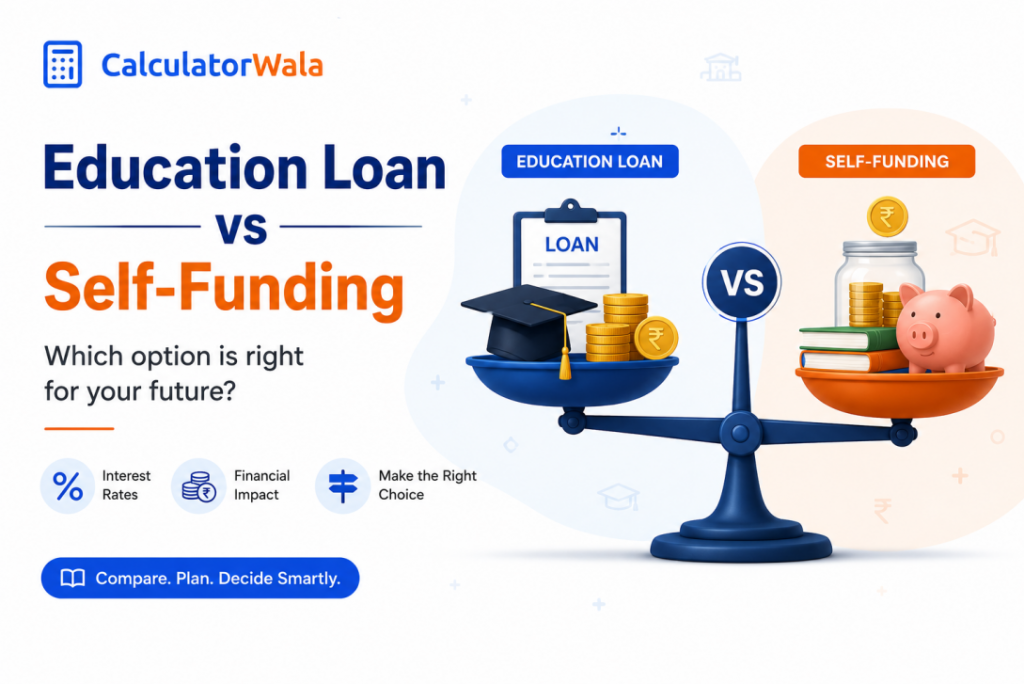
You’ve got the admission and the savings to (just about) cover it. So a natural question arises: should you dip into your family’s savings, or take an education loan and keep the cash? It’s not as obvious as it seems. Education loan vs self-funding is a real financial decision with long-term consequences. Let’s weigh both sides honestly.
The Dilemma
Many families who can pay for education outright still wonder whether they should. Paying upfront feels debt-free and clean. But taking a loan has surprising advantages — tax benefits, preserved liquidity, and a head start on credit history. The right choice depends on your numbers and priorities.
The Case for an Education Loan
1. Tax Savings under Section 80E
The interest you pay on an education loan is fully tax-deductible under Section 80E for up to 8 years, with no upper limit. For families in higher tax brackets, this effectively reduces the real cost of borrowing.
2. Preserved Liquidity
By not emptying your savings, you keep a financial cushion for emergencies — medical costs, job loss, or other needs. Education is important, but so is staying financially secure while paying for it.
3. Builds the Student’s Credit History
Repaying an education loan responsibly gives the student an early, positive credit record — useful later for home loans, car loans, or credit cards.
4. Encourages Accountability
When students know they’re repaying their own loan, many take their studies and career planning more seriously.
The Case for Self-Funding
1. No Interest Cost
This is the big one. An education loan at 10% over 8-10 years adds a substantial interest burden. Self-funding avoids it entirely.
2. Debt-Free Start to Career
Graduating without an EMI hanging over you gives genuine peace of mind and flexibility — to take a lower-paying but better-growth first job, for instance.
3. Simplicity
No applications, no collateral, no co-applicant paperwork, no moratorium calculations.
Head-to-Head Comparison
| Factor | Education Loan | Self-Funding |
|---|---|---|
| Interest cost | Yes (but partly offset by tax benefit) | None |
| Tax benefit (80E) | Yes, on full interest | None |
| Liquidity preserved | Yes | No — savings used up |
| Builds credit history | Yes | No |
| Career-start stress | EMI obligation | Debt-free |
| Paperwork | Significant | Minimal |
A Practical Middle Path
You don’t have to choose all-or-nothing. Many families take a partial loan — funding part from savings and borrowing the rest. This keeps the loan (and interest) small, preserves some liquidity, and still captures a portion of the Section 80E tax benefit. It’s often the smartest option for families who can afford to self-fund but don’t want to drain everything.
Who Should Choose What?
- Take a loan if: you’re in a high tax bracket, want to preserve emergency savings, or believe the student benefits from building credit and accountability.
- Self-fund if: the course cost is modest, you have ample savings beyond emergencies, and you value a completely debt-free start.
- Go partial if: you can afford full funding but want to balance interest cost against liquidity and tax benefits.
Run the Numbers First
Before deciding, see what an education loan would actually cost you. Our free Education Loan Calculator shows your EMI, total interest, and moratorium impact — so you can compare the real cost of borrowing against paying upfront, and make a confident decision.
Frequently Asked Questions
Is it better to take an education loan or pay from savings?
It depends on your tax bracket, savings cushion, and priorities. A loan offers tax benefits and preserved liquidity; self-funding avoids interest entirely. A partial loan often balances both.
How much can I save in tax with an education loan?
Under Section 80E, the entire interest paid is deductible from taxable income for up to 8 years. Your actual saving depends on your tax slab — higher earners save more.
Can I take a partial education loan?
Yes. You can fund part of the cost yourself and borrow the rest, keeping the loan small while still claiming tax benefits on the interest you pay.
Try our free calculators
Put this into practice with CalculatorWala's accurate, India-focused financial tools.
Open Calculators